


On arrival at Heidelberg University, graduate students will be aided by the HGSFP Central Office.
Practical information for relocating to Heidelberg, including housing, transportation, and local resources.
https://www.graduateacademy.uni-heidelberg.de/promovieren/leben_en.html
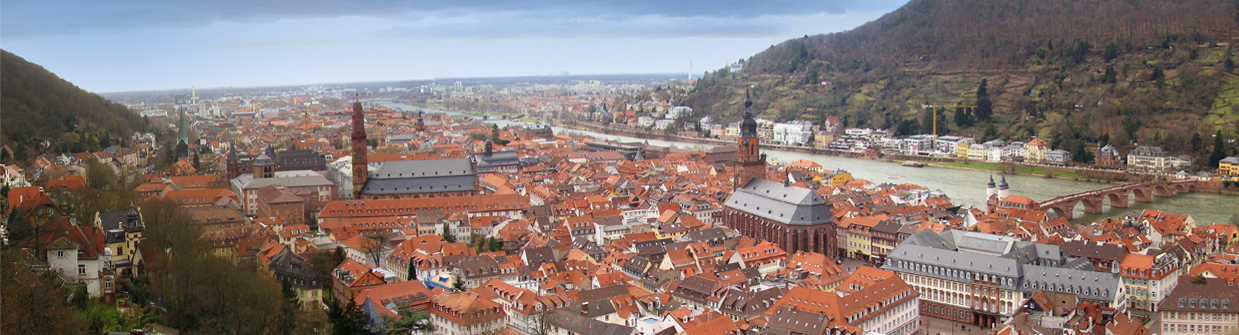
Heidelberg is a small town with ca. 150 000 inhabitants, of which ca. 30 000 are students at the University. The University itself, with many of its Physics Institutes lies in the valley of the river Neckar. The landscape in the valley is extremely flat - a good means of transport for students is thus generally a bicycle.
There is of course an excellent bus and tram system too, so that one does not necessarily need a car at all. Some of the Physics Institutes, however, are on the mountain (see Max Planck Institutes) and these are better reached by car or bus.
Anyone planning to stay in Germany for an extended period is legally required to register their place of residence at the local administration office (Bürgeramt) within one week of arrival; this registration is free of charge and must be completed in the city or district where you live. In addition, a residence permit is required to remain in Germany for a limited period and must be applied for before the entry visa expires, usually within three months of arrival. In most cases, doctoral candidates are issued a residence permit under §16b of the German Residence Act (for the purpose of studying), and in exceptional cases under §18d (for the purpose of research).
https://www.graduateacademy.uni-heidelberg.de/promovieren/einreise_en.html
Health insurance in Germany is mandatory for anyone living in or staying for an extended period and is required to obtain a visa, residence permit, and university enrollment. It covers preventive check-ups as well as medical treatment for illness or accidents, with either full or partial coverage depending on the policy. There are state-regulated and private health insurance options, and the type of insurance is usually determined by how a doctoral candidate finances their stay (e.g. employment contract or other funding).
https://www.graduateacademy.uni-heidelberg.de/promovieren/versicherungen_en.html